Inclusion of Discretionary Items in Energy Balance
Observational data on energy contribution and daily intake management
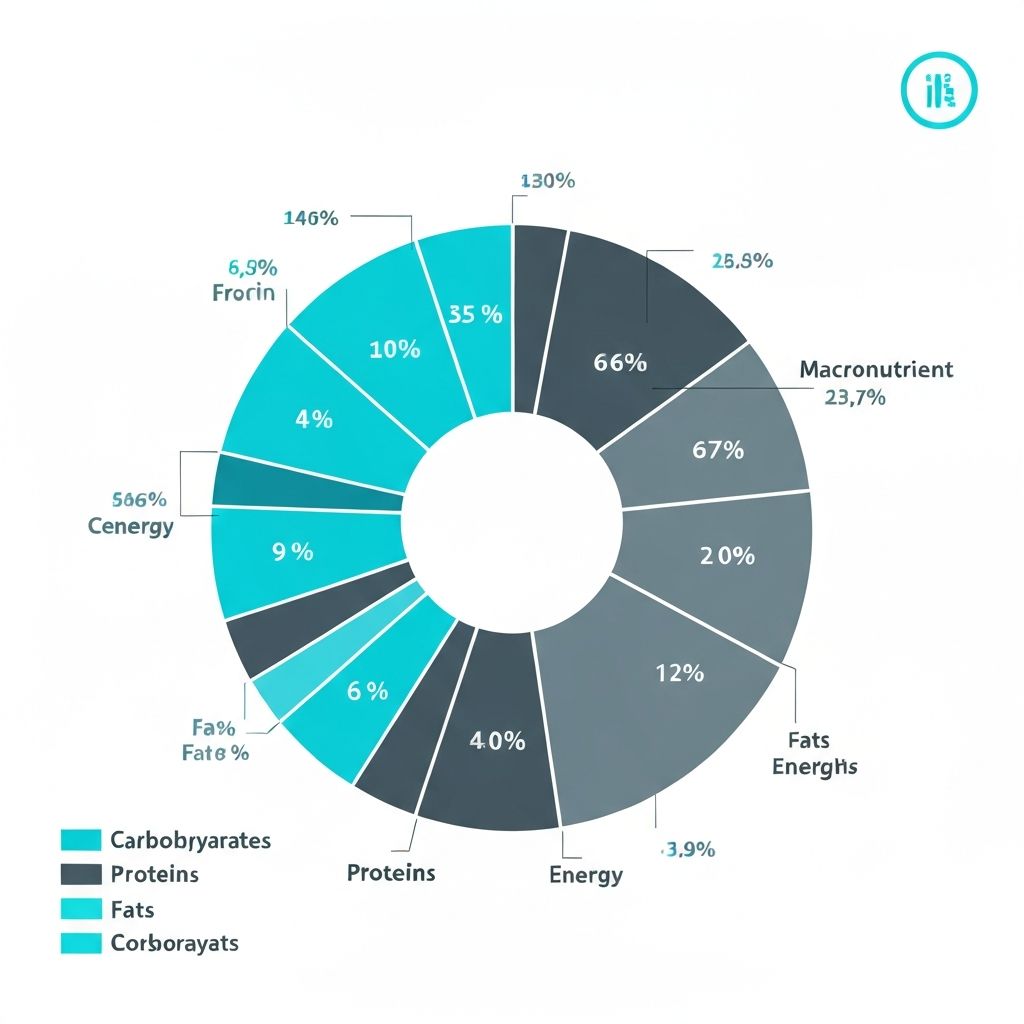
Observational Patterns in Population Intake
Large-scale dietary surveys and observational studies document the proportion of daily energy intake derived from discretionary foods across populations. These data provide context for understanding how treats and similar items fit into overall eating patterns.
In developed nations with abundant processed foods, observational data consistently show that discretionary items contribute substantially to total energy intake. Across diverse populations, discretionary foods account for approximately 10–30% of daily total energy intake, with considerable individual and regional variation.
This proportion matters because it defines the energy "budget" available for discretionary foods within a fixed daily energy intake. If a person's daily energy target is 2,000 calories, and 20% of this comes from discretionary sources, only 400 calories are available for treats while remaining within target.
Discretionary Food Percentage and Weight Outcomes
Research examining the percentage of daily energy from discretionary foods in relation to body weight outcomes documents relationships between treat consumption and weight change. Studies comparing populations with different discretionary food intake levels show that higher percentages of daily energy from treats correlate with higher average body weights.
However, causality is not established in observational data alone. Populations consuming higher percentages of energy from treats may differ in many ways beyond treat consumption—overall activity levels, total caloric intake, and other dietary factors. Intervention studies provide additional evidence.
Nevertheless, the consistency of observational associations between high discretionary food consumption and higher body weights across numerous populations and time periods suggests a meaningful relationship between treats and energy balance.
Intervention Studies and Discretionary Food Inclusion
Controlled intervention studies examining structured energy deficits document outcomes when discretionary foods are deliberately included within controlled total energy intake. These studies provide more direct evidence about the role of treats in achieving energy balance targets.
Research shows that modest percentages of daily energy from discretionary foods—typically 10–20% within an overall energy deficit—do not prevent weight loss if total energy deficit is maintained. This finding is consistent with fundamental energy balance principles: what matters is total daily energy, not the source of those calories.
However, intervention studies also document challenges with sustaining low energy diets that are extremely restrictive of treats. Some individuals report difficulty maintaining very strict restrictions over extended periods, while others maintain them readily. This variation again highlights individual differences in response to different dietary approaches.
Discretionary Food Consumption and Adherence
A critical finding from long-term intervention studies is that dietary adherence frequently matters more than the specific composition of the diet. Approaches that permit modest discretionary food inclusion sometimes show better long-term adherence than very restrictive approaches, though this is not universal.
Some individuals find that permission to include treats improves long-term adherence and sustainability of an eating pattern. Others find that any treats trigger loss of control and subsequent overeating. For this latter group, stricter restriction of treats may be the more sustainable approach.
The observation that adherence varies based on individual psychology and context suggests that different percentage allocations of daily energy to discretionary foods may be optimal for different people, depending on their psychological responses and the sustainability of different approaches for them.
Sustainable Inclusion Ranges
Research and professional guidance often reference percentage ranges for discretionary food inclusion—commonly 10–20% of daily energy—as potentially sustainable within maintained energy balance. These ranges represent balances between including enough treats to feel psychologically sustainable and not including so many that overall energy intake balloons uncontrollably.
However, these percentage ranges are descriptive (derived from observation and research) rather than prescriptive (universally optimal). Some individuals successfully maintain weight with 5% of energy from treats; others find they need 25–30% of energy from discretionary items to feel satisfied and sustain their approach. Neither is "wrong"—both represent valid individual differences.
The ranges frequently referenced in research represent population averages and observations, not universal rules. Individual variation remains substantial.
Energy Density and Volume Effects
Because discretionary foods are energy-dense, they represent a smaller volume of food for their energy content compared to nutrient-dense foods. From a practical standpoint, this means that achieving satisfaction through volume is more challenging when consuming discretionary foods.
A person consuming a discretionary-food-heavy diet may feel unsatisfied at lower total calorie amounts compared to someone eating primarily nutrient-dense foods, because the volume of food consumed is less. This difference in satiation through volume may contribute to higher overall energy intake when discretionary foods comprise large percentages of total intake.
This consideration illustrates why the percentage of energy from treats is relevant: high percentages not only contribute more calories but may also reduce satiety through lower overall food volume.
Context and Practical Management
Observational and intervention data combined suggest that inclusion of some discretionary foods is feasible within maintained energy balance, provided total intake remains at or below targets. However, the feasibility of maintaining such balance depends on multiple factors: individual satiety responsiveness, frequency and portion size of treat consumption, compensatory eating patterns, and the broader food environment.
In food-abundant environments with constant access to treats, maintaining a modest percentage of energy from discretionary foods requires active management and attention. In more restricted food environments, incidental inclusion of treats may naturally remain modest.